
An Action They Never Committed
On June 15, 1774...

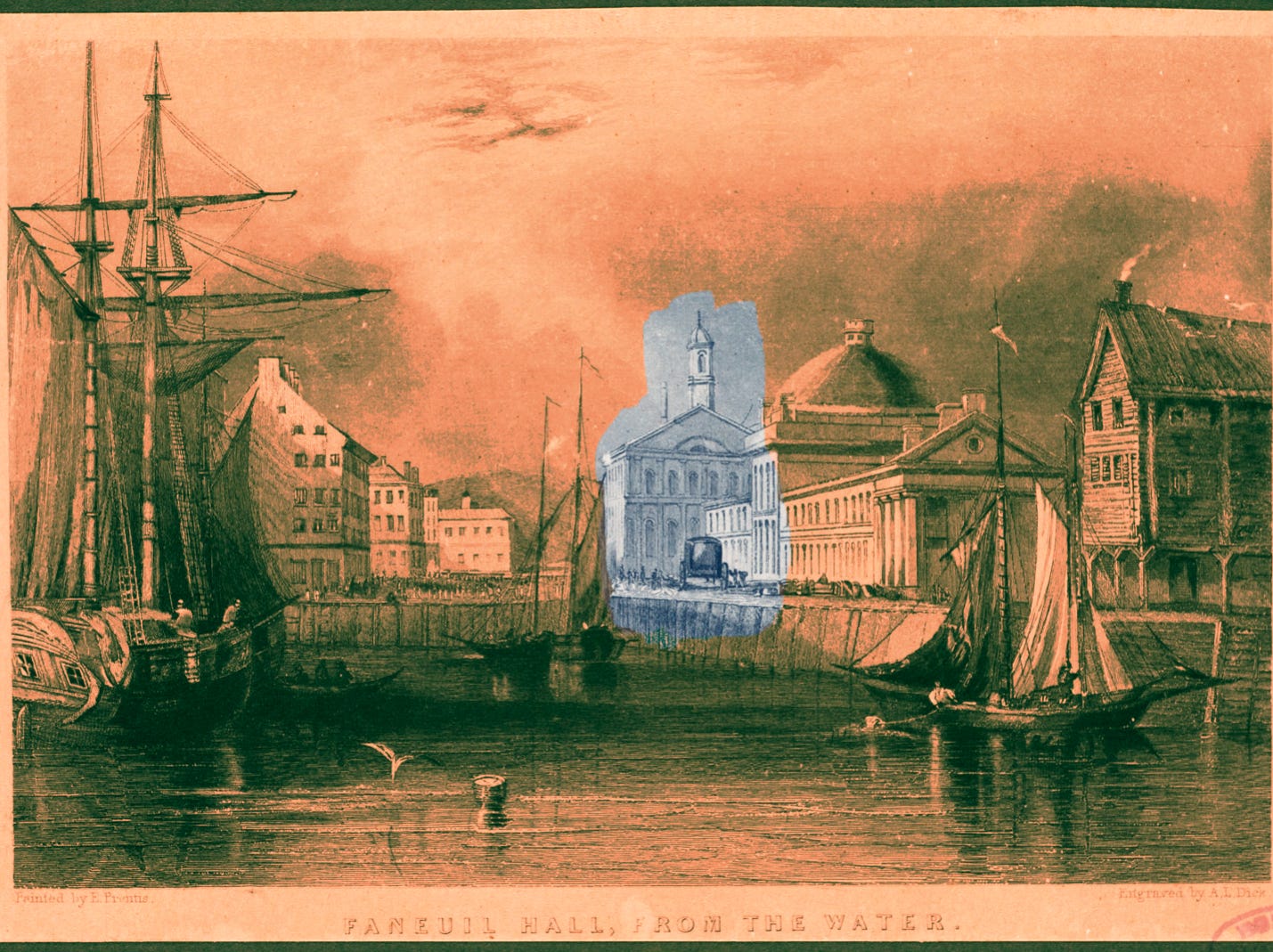
On June 15, 1774, Boston citizens held a meeting in Faneuil Hall to debate how the townsmen should respond to the blockade that the British had just imposed on the port of Boston. At issue was whether the citizens should pay for the tea that some radicals had dumped in the harbor back in December. There was no resolution, but the meeting amplified the polarization. Some local merchants favored paying for the tea, but those who made such a formal proposal drew weak support.
It was not a trivial sum. The fab for the 340 chests of tea belonging to the British East India Company was £9,659, which, a few years ago, translated to $1.7 million in U.S. dollars. In today’s Biden-inflated dollars, who knows? Perhaps twice that amount.
In any case, many regular citizens of Boston opposed the idea of paying for the spoiled brew, especially since Parliament didn’t ask very nicely. Shutting down the whole port and imposing harsh penalties on anyone caught disobeying the orders rubbed the colonists the wrong way. The Faneuil Hall debate reached no conclusion other than, as reported, “Altercations.”
Those altercations continued in the local press. Joseph Warren, the physician who was a principal figure in the Patriot movement in Boston—and who was later killed in the Battle of Bunker Hill—led the opposition to pay for the tea. One of his opponents, Harrison Gray accused Warren of terrifying the crowd so that they turned away from what Gray considered the “prudent” approach. A patriot who styled himself “Cincinnatus” described the faction that favored paying the teamail as a “little host of unthinking merchants, unprincipled traders, eager dependents, and riotous spoilers.”
Cincinnatus asked why Bostonians who had not participated in the Tea Party should have to pay damages for “an action they never committed?” The question echoes today when the Biden administration “forgives” student loans, effectively passing along the cost of those loans to the many Americans who did not borrow the money or even attend college. To borrow a word that is popular these days, the repayment—or the loan forgiveness—raised an “equity” issue.[1]
These days, Faneuil Hall is the granite block pedestrian mall where tourists can treat themselves to seafood lunches served by surly waiters and indulge in ice cream and sweets, and perhaps tea as well, taxed at whatever exorbitant rate the government of Massachusetts imposes on the successors of Joseph Warren and his fellow patriots.
Public debates may fail to produce a decisive winner in the eyes of those immediately involved, but the apparent failure can disguise the actual outcome. By rejecting a hard and fast proposal to appease those who demand a particular result, the participants may be saying, in effect, “we are in no hurry,” and that leaves the door open to those who reject appeasement.
Follow the National Association of Scholars on X.
[1] I have followed Mary Beth Norton’s account in 1774: The Long Year of Revolution. Alfred A. Knopf, 2020. Pp. 112-114.
Art by Beck & Stone