
By Committee
On June 7, 1776...

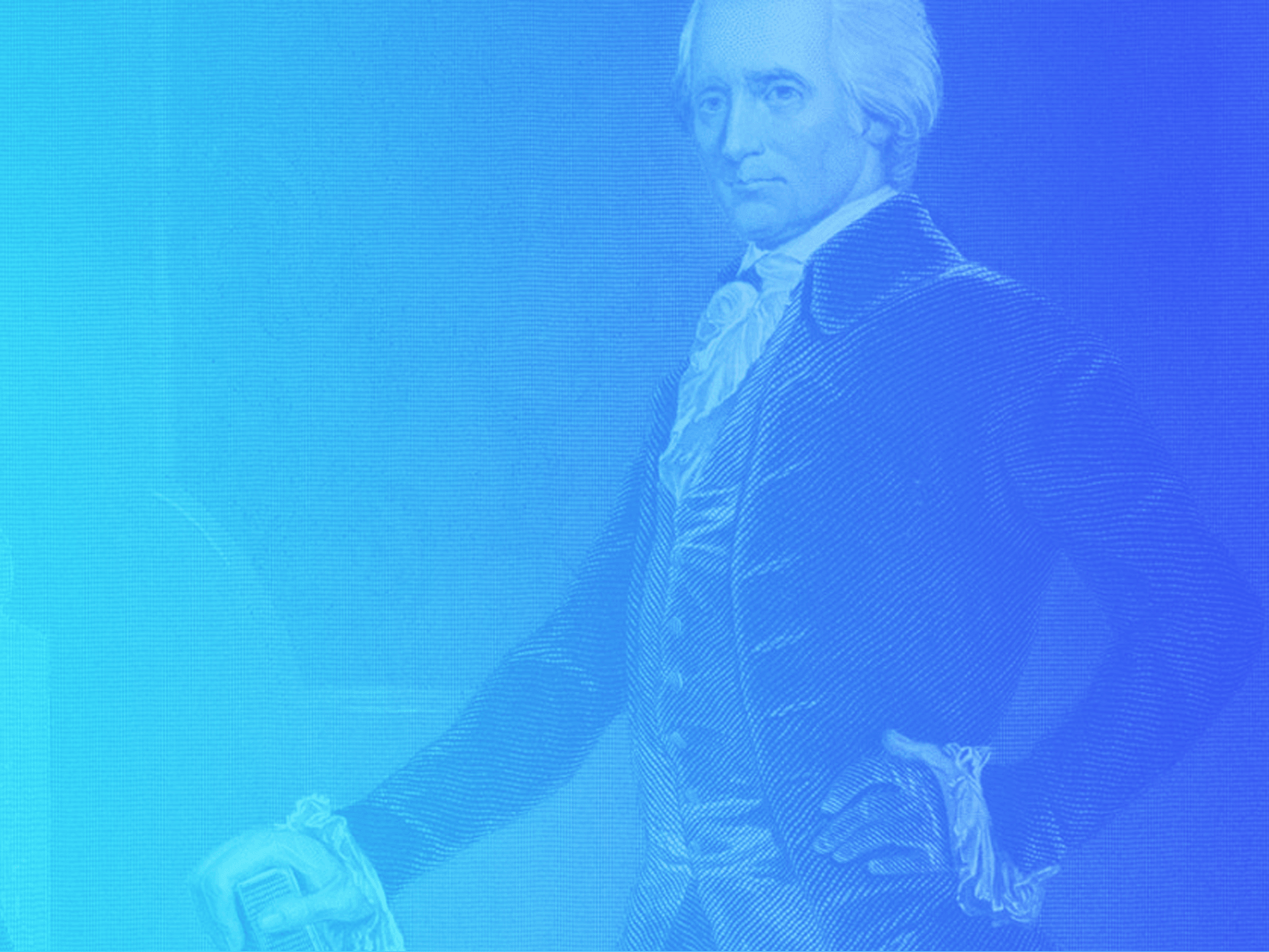
On June 7, 1776, Richard Henry Lee of Virginia introduced a resolution in the Second Continental Congress that the 13 colonies ought to be independent states, free of the British Empire. Lee’s Resolution consisted of three parts:
Resolved, That these United Colonies are, and of right ought to be, free and independent States, that they are absolved from all allegiance to the British Crown, and that all political connection between them and the State of Great Britain is, and ought to be, totally dissolved.
That it is expedient forthwith to take the most effectual measures for forming foreign Alliances.
That a plan of confederation be prepared and transmitted to the respective Colonies for their consideration and approbation
Lee’s Resolution at last lit the fuse for irrevocable revolution. In less than a month, Congress would declare America’s independence.
Richard Henry Lee’s character probably had almost nothing in common with the cornpone goofball presented in the musical 1776, our source for much of what we think we know about the Founding Fathers. But, as in the musical, he certainly was a well-connected gentleman, and it mattered that he submitted the resolution for independence. A John Adams was only a country lawyer from Massachusetts; a Lee was a Virginia aristocrat. The very sobriquet “the Lee Resolution” underscored that America’s revolution was not the creation of a rabble in arms.
Lee’s Resolution also lucidly divided the political prospect into three issues.
Independence, of course, was first: that the United Colonies declare themselves free of their imperial mother. But freedom required practical measures to sustain it. Confederation must be considered at once, to ensure that the now-free colonies would not be defeated separately by Great Britain’s forces. But it would not be easy to settle the terms by which the disparate colonies would become one country. Indeed, the terms would not be fully settled till four-score and nine years had elapsed, and a terrible civil war had rent the union. But even in 1776, it was clear that a plan of confederation was a separate and vital political issue.
And America’s intelligent revolutionaries realized they would still need help to secure independence from Great Britain. Sotto voce: France! – Spain, the Netherlands, all the enemies England had accumulated over the years. From the beginning, Congress knew they must angle for “foreign Alliances,” if America were to defeat England’s fleets and armies.
It was America’s genius, inherited from England, that all three aspects of the Lee Resolution were immediately delegated to separate committees. Relegation to committee would permit the work necessary to secure support for independence from a super-majority of the states—that much 1776 has right. Committee-work also meant giving Thomas Jefferson time to take the lead in drafting a Declaration worthy of American independence—a responsibility he would more than amply discharge.
But committee-work above all meant that the business of America’s independence was the business of age-old English processes of government. England’s Parliament had something like committees as far back as the 1300s, and a history of ever-thickening committee government from the 1500s onward. Accountable self-government, combining consent and efficiency, required informed, focused work by smaller bodies of representative legislators. Committee-work already was a habit of the colonies; Americans now relied upon it for their first essay in independent government. And quite successfully, too.
Government committees have acquired a bad reputation since, and often for good reason. Committees can be the routine graveyard of innovative policy, the creatures of inertia and corruption. Refer it to committee has become synonymous with consign it to oblivion. Clever establishmentarians can use committees to prolong a corrupt status quo indefinitely.
But committees also remain the proving ground of accountable self-government.
Every time I have attended a state legislature’s committee session, I have come away with increased respect for state legislators and increased respect for the work they do. Simply to sit and listen to prepared speeches on an extraordinarily wide variety of subjects is an exercise in sitzfleisch. And it is the meat-and-potatoes of accountability: if you propose a change to state policymakers, you have to make a coherent five-minute pitch for your proposal, and a committee of them has to listen to it. Some part of committee-work is political theater—but it is theater that requires something more than mere bureaucratic or executive imposition of policy by fiat. Attend the business of our state legislatures—or elected state boards of education, or county governments, or town councils—and you will see that America is still using committees to keep up our long practice of self-government.
And the alternative is not dictatorial efficiency. It is the relegation of government to quangos, quasi-autonomous non-governmental organizations, who specialize in dictatorial inefficiency. The United Kingdom, alas, has abandoned much of its ancient liberties for quangocracy; America’s lesser but still grave dysfunctions also owe more to rule by quango than rule by committee.
Richard Henry Lee’s resolution submitted the Declaration of America’s independence and the form of our union to the committee working in Philadelphia and the consent of the states. The consent of the people, in other words, but articulated by the ancient forms of self-government we had inherited from England. To use these forms of government would ensure that America would only declare independence if there truly were a broad and profound desire for revolution, and it would ensure that when America did declare independence, it would do so with the best possible Declaration and with the best possible means to keep its independence.
And so we would. Even via the slow wheels of committee work, it would be a short road from Lee’s Resolution on June 7 to the Declaration on July 4.
Follow David Randall on X.
Art by Beck & Stone
Visit the National Association of Scholars to see more projects like this.
“Let the names of Whig and Tory be extinct; and let none other be heard among us, than those of a good citizen, an open and resolute friend, and a virtuous supporter of the rights of mankind, and of the FREE AND INDEPENDENT STATES OF AMERICA.”
-Thomas Paine: Common Sense, January, 1776