
Nine Shots Per Man
On March 5, 1776...

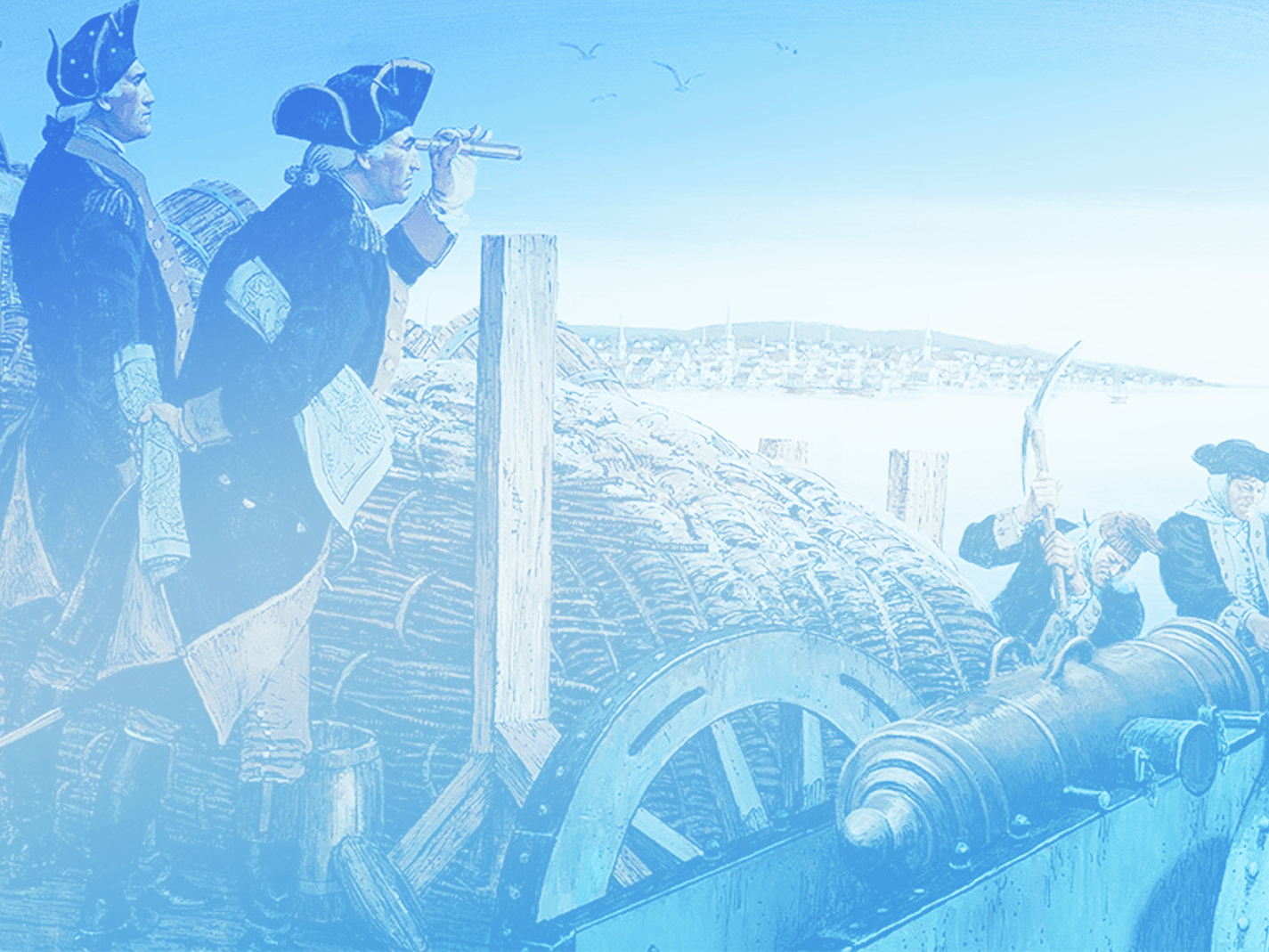
Boston was the sanctuary city of the American Revolution—or Rebellion, as the British saw it. It led the protests against the Stamp Act of 1765. It was the home of the much-ballyhooed Boston “Massacre” of March 5, 1770, and the Boston Tea Party of late 1773. In response, it was the target of the “Intolerable Acts” of early 1774, which included a naval blockade. By the time of the Somerville Powder Alarm of September 1, 1774, the British had subjected Boston to a military occupation of the sort that ICE could only dream of in Minneapolis.
The British infatuation with Boston, however, became a trap. By April 19, 1775, it became clear that the British were ignorant of the surrounding colony’s anger towards them. As a result, the besiegers quickly became the besieged.
As with any siege, geography played a large role. An early historian noted:
In 1774 South Boston was a mudflat; the Back Bay—at least at high water—was what its name implies; Chelsea was Winnisimit, with but half a dozen houses; and East Boston was an island, having but two houses on it. Now [1911] the flats have been filled up, the mainland brought closer, and the approaches bridged. In Governor Gage’s day Boston was still a peninsula, roughly pear-shaped, and connected with the mainland by a strip of land which was, at high tide, scarcely a hundred yards wide.
But the British still controlled the harbor, their lifeline of supplies and reinforcements.
Despite this advantage, Governor-General Gage knew that if the Provincials took control of the high ground around the city—especially Bunker Hill to the north and Dorchester Heights to the south—his position would become desperate. The colonists’ attempt to fortify the former led to the British attack on June 17, 1775. Bunker Hill was a British victory, but nearly a Pyrrhic one. If it did not teach the British to respect the Provincials, it did at least cause them to fear them: as brave, tough, more disciplined than expected—they present a motley show, with various colors and varied equipment—and damn good shots.
And despite receiving thousands of reinforcements, and gathering over 1,000 Tories from the countryside into the city—including my seventh great-uncle, Timothy Ruggles, who led the “Loyal American Associators” in drills on Boston Common but not much else—Gage also worried about committing troops to a sally, for fear the town might rise behind him. Defending an occupied city against a siege is a ticklish business.
The British tried to forage goods—hay, sheep, cattle, butter, eggs, etc.—from the surrounding countryside, but the Provincials did a good job driving them back into the harbor. As a result, even with occasional supplies from England, times were tough in besieged Boston, especially for the patriots who remained there. As Timothy Newell, one of the seven selectmen of Boston, noted in his laconic diary, on August 1, 1775: “This day was invited by two gentlemen to dine upon rats.” Later that month, the British cut down the famed Liberty Tree for fuel. As the weather cooled—though it turned out to be a mild winter—patriots were turned out of their houses to quarter British troops, and some buildings, including Newell’s barn, were torn down for firewood. In October 1775, General Burgoyne transformed the Old South Meeting House into a riding school for his cavalry. On January 16, 1776, General Howe, who replaced General Gage in September, ordered the Old North Meeting House to be torn down to warm the British and Tories.
When George Washington took command of the provincial troops on July 3, 1775, he faced a daunting task: he had at best 16,000 men to hold a front at least eight miles long. Powder was in such short supply that in August Washington had only enough for nine shots per man. His artillery would not have lasted a day in action. Thankfully, the British never learned of these shortages, or if they did, they didn’t believe it. Also, in the winter of 1775, sickness ravaged the besiegers, recruitment fell short, and enlistments were expiring. A brief respite from gloom came on January 1, 1776, when the Continental flag with 13 stripes was raised for the first time in Washington’s camp.
As a result, there was little fighting around Boston after Bunker Hill. The British probed the waterways around the city, but the accuracy of the Virginia riflemen made them give that up. Despite all his hardships, Washington proposed attacking Boston in September and October 1775, as well as in January and February 1776, but each time his council of war rejected his plan. Selectman Newell noted many instances of cannon fire from both sides, “to little effect.” On December 17, 1775, a ball struck “the hat off the head of young Dr. Paddocks.” Even the bombardment of March 2-5, which distracted the British from the real threat, did little harm to the city. These Americans had not, it seems, learned the lesson of their more enlightened descendants, one of whom could explain in a later war that, “It became necessary to destroy the town to save it.”
To those of us wise in the ways of “blitz” and “overkill,” there may appear something farcical about the siege of Boston, which makes it fitting that it provided the stage for one. That winter, the British turned Faneuil Hall into a theater. On January 8, The Blockade of Boston was presented, in which, according to one of the old historians, “a burlesque Washington enters in an uncouth gait, with a large wig, a large rusty sword, attended by a country servant with a rusty gun.” But the real Washington stole the show. He ordered his troops to attack some buildings in Charlestown that evening, which led to the farce being suspended, as the audience of officers hurried out to their posts.
The news in January 1776 of guns and supplies coming from Ticonderoga began to turn the tide for Washington. Though he still lacked men, arms, ammunition, and other supplies, he began plans in February to fortify Dorchester Heights, which would allow these guns to command much of the town and the harbor. To do so, he had his troops prepare bundles of sticks and frameworks to hold them in place as an embankment. He gathered hundreds of carts to carry men and material to Dorchester. If the British let him, he would strike suddenly, but with ample preparation.
His general orders of February 26, 1776, are illuminating:
All officers, non-commissioned officers, and soldiers are positively forbid playing at cards and other games of chance. At this time of public distress men may find enough to do in the service of their God and their country without abandoning themselves to vice and immorality.
As the season is now fast approaching when every man must expect to be drawn into the field of action, it is highly important that he should prepare his mind as well as everything necessary for it. It is a noble cause we are engaged in; it is the cause of virtue and mankind; every temporal advantage and comfort to us and our posterity depends upon the vigor of our exertions: in short, freedom or slavery must be the result of our conduct; there can therefore be no greater inducement to men to behave well. But it may not be amiss for the troops to know that if any man in action shall to skulk, hide himself, or retreat from the enemy without the orders of his commanding officer, he will be instantly shot down as an example of cowardice; cowards having too frequently disconcerted the best formed troops by their dastardly behavior.
The night of March 2, Washington began bombarding Boston to make the British believe he might be preparing an assault. The bombardment continued the night of March 3, as Washington’s men and carts prepared to move. On the moonlit night of March 4, the caravan of 2,000 men set out to Dorchester Heights, the path strewn with straw to muffle sound, and bales set along the roadside to hide their movement. The men set the frameworks into the side of the hill and covered them with earth to provide cover for the guns from Ticonderoga. They worked feverishly through the long night.
When Howe saw the Americans ensconced on Dorchester Heights the morning of March 5, he was amazed. He is said to have exclaimed that his whole army could not have done as much in a month. He thought that 12,000 men must have been employed. If the British decided to attack, Washington would have welcomed it. Not only could he give Howe even worse than he got at Bunker Hill, but it was the sixth anniversary of the Massacre, and his troops were ready.
The siege of Boston wasn’t the end of the war. It wasn’t even the end of the beginning. But it made clear to the British that the Americans were in it to win it.
But what of Boston? Would it be saved or destroyed?
Follow Keith Whitaker on X.
Art by Beck & Stone
I'm continually stagged by the gumption of Henry Knox and the other Americans who trudged to Fort Ticonderoga, grabbed the cannons, cut down trees, and built their own roads to bring the guns to rescue Boston. I can remember being at Ticonderoga when I was seven, having no grasp of the distance to Boston, but still being amazed and proud to be an American.
That Christmas, my parents gave me Guns for General Washington, an excellent classic. (https://amzn.to/4cwLZFZ)
I also like the picture book Sleds on Boston Common for bringing a touch of children’s humor and also for humanizing General Gage and the rest of the British, who are no longer our mortal enemies. (https://amzn.to/4lhZZ96)